

Bite Mark Evidence Is Unreliable but Legally Accepted
Bite mark analysis is a practice that has never received official scientific validation. One-quarter of the exonerations that have taken place from 1989 onward involved wrongful convictions that were made on the basis of deceptive forensic evidence that often turned out to be false – and bite marks are a prime example.
When Experts Can’t Agree
In a report published in 2009, the National Academy of Sciences went into detail about the issue of unreliability in numerous forensic techniques that are still commonly used in criminal cases. The organization found that the false results collected by these practices were significant, including bite mark evidence.
The most troubling moment came for the ABFO’s (American Board of Forensic Odontology) former president, Dr. Adam Freeman, along with Dr. Iain Pretty. These two were unsettled by the rise in false data collected from bite mark analysis, so they worked together in an attempt to prove the validity of their field.
But in the study they conducted, experts could rarely even agree on what was a bite mark and what wasn’t. These were dentists who were certified by the ABFO, and the experts were being asked the most basic questions and failing miserably at it.
It was enough to cause Dr. Freeman to decide to end his work in bite mark analysis. And he has been followed by other experts, leading an exodus from forensic dentistry, including his colleague Dr. Pretty as well as Dr. Cynthia Brzozowski and many more. These experts now find it to be an unreliable discipline that they can no longer carry out with good conscience.
 According to the Innocence Project, there have been 26 cases of wrongful conviction that were attained through the use of bite mark evidence. This is almost certainly only the tip of the iceberg, though, since more evidence may still be called into question while other evidence has already been lost.
There are countless cases of experts putting too much weight into bite mark analysis, even when it contradicts other evidence in the case. One that Morristown criminal defense lawyers often see involves using overly definitive language to describe the alleged actions of the perpetrator.
What’s Wrong With Bite Marks?
The arrangement of teeth in a person’s mouth is called human detention. This isn’t necessarily like a fingerprint in that it’s different for every person. A person’s bite has not been scientifically proven to be unique.
But there is a bigger problem when identifying criminals from bite marks found on a body: the medium in which the impression is being made. Human skin usually does a poor job of leaving a lasting, accurate representation of a person’s bite. Even if the same individual left bite marks on two different victims, it may be hard to identify commonalities between the impressions made.
When a bite mark is found on a body, the skin isn’t actually indented. Forensic scientists examine the bruises that remain from where the bite occurred. A bruise is a diffuse area of blood beneath the skin, and this doesn’t necessarily give an exact approximation of the oral detention of the biter. And people bruise differently, some more easily than others.
Adding another factor of unreliability, each person’s skin has a different level of elasticity that depends on a variety of factors like the individual’s body mass index, age, and diet. And depending on how a person was moving at the time, the amount of tension in the skin may be called into question and create another variable affecting the way an individual’s bite marks may appear in forensic analysis.
Why Is Evidence From Bite Mark Analysis Still Admissible in Court?
This comes down to the pace at which laws can be changed versus scientific discovery, which operates on its own schedule. Because court decisions heavily rely on precedent, looking back on the past decisions in other courts, laws cannot be changed very quickly. This is intended as a way to protect the public from sudden and drastic law rewriting based on current political trends. But a new discovery can change the way we look at a type of forensic evidence in an instant, which creates a disconnect between the laws in place and the scientific consensus.
Call Gregg Wisotsky, Esq. today at 973-898-0161. He’s a Morristown criminal defense lawyer who has been a trial lawyer for decades, and he may be able to offer new insight into your New Jersey case.
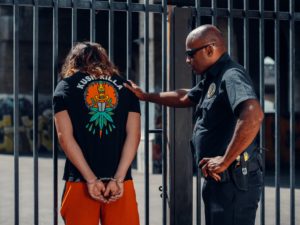 Miranda rights might sound fairly broad, but they are only relevant in a few specific situations. A Miranda warning is required if you are in police custody and under interrogation. Any remarks you make outside of those situations do not require one.
 Other tests that measure blood alcohol concentration must also be administered properly for the same reason. When a person is ordered to give blood or urine for testing to determine if he or she may be guilty of DUI, the samples cannot be tampered with or tainted, or they could give false results. A
 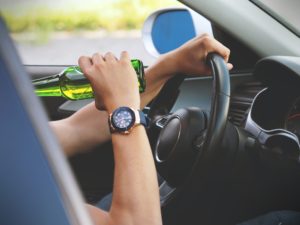 In this legal strategy, the DUI attorney questions the execution of a blood test and how the blood sample was handled. Police and testing personnel must follow strict procedures when processing these samples. Supposing these procedures were not followed, the blood sample reading may not stand up in court.
 When you meet with the attorney, explain the entire incident. Allow them to plan for gathering evidence, finding witnesses to testify, and negotiating with the prosecutor. Your attorney is legally obligated to defend you to the best of their ability, so you can trust them to handle the proceedings.
 Another possible defense is the idea that you did not intend to deprive the victim because you were simply borrowing the object. This defense can be a little trickier to prove because it is all about your intentions. It usually works best in situations in which the defendant had reason to believe they could temporarily use the object and promptly brought it back as soon as possible. It may be harder to prove in cases in which the defendant took an object and had no reasonable way of returning the item to its rightful owner.
 Mail Fraud vs. Regular Fraud
 If you need to get out of jail as soon as possible, you may be considering hiring a bail bond company. These bonds are helpful for those who don’t have enough cash to pay the full amount of the bail. In many situations, you can find several bail bond companies with offices near jails, courthouses, and police stations. Many of them are open 24/7. With those hours, you can guarantee to get a bond when you need it.
 First- and Second-degree Property Crime Penalties