

Sale and Trafficking | Possession of Drug Paraphernalia
 As a general rule, though New Jersey does allow for medical use of marijuana, the state takes a serious approach to the possession, cultivation, and trafficking of the drug. In Part One of this series, we looked at how New Jersey treats possession and cultivation of marijuana. In this blog, we look at the penalties for sale or trafficking, as well as possession of drug paraphernalia.
Sale and Trafficking of Marijuana in New Jersey
As we indicated in Part One of this series, New Jersey identifies all marijuana crimes as Schedule I offenses, considered the most serious drug crimes. The penalties for sale or trafficking are based primarily on the amount sold (you can also be charged with possessing a quantity of marijuana with the intent to sell).
- Less than 1 ounce—Selling less than 1 ounce carries a potential prison sentence of 18 months, as well as a fine of up to $25,000
- Less than 5 pounds—If you are caught trafficking more than 1 ounce but less than 5 pounds, you can face 3-5 years in prison and a $25,000 fine
- Less than 25 pounds—For a conviction for selling more than 5 pounds but less than 25 pounds, you can be sentenced to 5-10 years in prison and up to $150,000 in fines
- More than 25 pounds—If convicted, you face between 10 and 20 years in prison and up to $300,000 in fines
Certain characteristics of the offense can add to the penalties, including trafficking in a school zone, public park, or public housing or selling to a minor or pregnant woman.
Possession of Drug Paraphernalia
New Jersey also penalizes possession of certain items used in the growing, harvesting, processing, selling, storing, or use of marijuana. Objects that may constitute drug paraphernalia include pipes, bongs, roach clips, spoons, cigarette papers, and chillums (cone-shaped pipes). Possession of drug paraphernalia is punishable by incarceration for up to 6 months, a $1,000 fine, or both.
Contact Gregg A. Wisotsky, Esq, Partner, Javerbaum Wurgaft Hicks Kahn Wikstrom & Sinins, PC
We offer a free phone consultation to every prospective client. For a complimentary evaluation of your case, contact our office online or call 973-898-0161. We will come to your home or the hospital to meet with you, if necessary. All major credit cards are accepted.
 Under New Jersey’s
  In the aftermath of a work-related injury, you have the right to pursue benefits through the New Jersey
  You may have suffered an injury on the job but find yourself worried about filing a
  We set aside one day every year to give thanks, but here at Law Offices of Gregg A. Wisotsky, we are thankful throughout the year for the relationships that we have built with our clients. We value your trust and your confidence, and we are committed to helping you achieve your goals.
 According to statistics gathered by the National Highway Traffic Safety Administration, there was a significant increase in motorcycle-related deaths from 2014 to 2015 and the annual number of fatalities has remained at the higher level in subsequent years. Officials say the increase is primarily the result of cheaper gasoline costs, which put more people on the road for longer periods of time.
 Under the laws of the state of New Jersey, it is illegal to produce, possess, sell of distribute any pornographic image that portrays or exploits someone under the age of 18. In fact, there are state and federal laws that lead to serious penalties for involvement in child pornography operations. In New Jersey, for example, it’s considered endangering the welfare of children to photograph or take footage of a minor in a proscribed sexual act, or simulating a prohibited act. The law forbids any attempt to convey those images to another person, including digital transmissions.
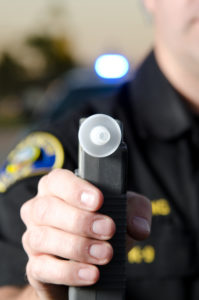 When you’ve been pulled over by law enforcement officers in New Jersey, you can be almost certain that the first question you’ll face is some variation of “have you had any alcoholic beverages today?” If your answer is yes, or if the officer has any reasonable suspicion that you may be impaired, the next step will typically involve some type of field sobriety test, so that the officer can either establish probable cause to administer a blood alcohol test or send you on your way.
 When you’ve been hurt by the careless or wrongful act of another person, you have a right to seek compensation for your losses. But what if that person is what the law considers “judgment proof”? For example, what if you were injured by a person who has no insurance and who has no assets. You may be able to get a verdict, but have little hope of ever collecting on that judgment.