


Who Pays the Price for Wrongly Identified Suspects?
Statistics have overwhelmingly revealed that the biggest reason why people are wrongfully convicted comes from eyewitnesses incorrectly identifying them as the individual who committed the crime. This underlines the crucial nature of effective and accurate procedures to elicit eyewitness evidence and prevent innocent people from being wrongly accused.
Investigators Can’t Interfere With Estimator Variables
The issue with many key aspects of the eyewitness process is the legal fact that investigators are restricted from interfering in the process in any way. Those parts of the process are usually referred to as “estimator variables.”
These estimator variables are further broken down into three categories:
- Situational variables
- Target variables
- Witness variables
Situational variables always relate to the environmental conditions that the witness experienced when they saw the suspect. It may include things like visibility, such as fogginess or whether it was light or dark out. It can also refer to loud noises, dense crowds, or anything else that might make it easier or harder to correctly identify someone.
The term “target variables” may be misleading because it might sound as if it refers to someone who’s being targeted. On the contrary, targeted variables include anything that is seen from the eyewitness’s perspective. They refer to how the witness perceived the individual and the situation, including how they describe the physical traits of suspects and others involved or present in the scenario.
Witness variables are related to the witness’s own personal traits. This might call into question whether or not they are visually impaired and, if so, whether they were wearing their glasses or contacts at the time. It’s also important to note the type of visual impairment – whether the witness is nearsighted or farsighted.
Sunglasses also fall under the witness variable category, and so does the age of the eyewitness. Some of these variables, like those two in particular, can also interact with each other and compound the issue of unreliability.
With cross-racial identification, target and witness variables are both involved. This is because the witness’s race and the targeted characteristics that they perceive are considered to be intertwined on a functional level.
These three types of variables don’t stay neatly in their own categories either. Estimator variables also interact with and influence one another across the board, which creates a highly variable situation.
Once a crime has been committed and the investigation has started, there’s not much you or anyone else can do to get around these estimator variables. It is inevitable that they may negatively impact the performance of eyewitnesses.

System Variables Are Controlled by the Justice System
On the other hand, there are system variables. These fall under the control of the justice system.
When used effectively, there are policies within system variables that can help add value to the information elicited from witnesses and provide more insight into an investigation. However, when these procedures are used ineffectively, the wrongfully accused are often the ones who suffer the worst of the consequences.
To further complicate matters, there are times when estimator and system variables will interact with one another. The line can be blurry, so it’s not always clear-cut which side any given variable lies on.
In some situations, a system variable can also be an estimator variable, but an estimator variable cannot be a system variable. In spite of these discrepancies, it’s still helpful to think of these two variable types broadly as two distinct categories and remember that system variables are the ones that a Morristown criminal defense lawyer could potentially influence.
Showups and Lineups
Of all the methods used to elicit evidence from eyewitnesses, field identification procedures and lineups are two of the most crucial. Showups is another word for field identification procedures.
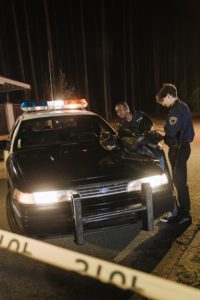
This procedure refers to when an eyewitness is shown the person suspected of committing a crime. This often takes place at the crime scene or somewhere in the general vicinity. Showups have been shown to be far worse for the suspects than lineups – and even lineups come with their own controversial set of problems.
Under the right circumstances, these field identification procedures may be allowed, particularly when a serious crime has been committed that carries dangerous implications for individuals or the public. The longer the perpetrator remains at large, the higher the likelihood that the criminal will endanger others.
When that’s the case, this infamously unreliable procedure may still be used to hopefully speed up the investigation process in any way possible. But when the matter is less urgent, it’s highly improbable that the use of a showup will be permitted.
Contact Gregg Wisotsky today to find out how a Morristown criminal defense lawyer can help your case. Give him a call at 937-898-0161 to set up an initial consultation.

 There Are Limits to What Can Be Expunged
 It’s much more common for these individuals to live out normal lives within the boundaries of the law and show up to all of their court dates. This has led many to believe that something is clearly going right with these new policies, and it’s something the world needs to hear. These proponents are adamant that bail reform is a story that the country should heed and something other states can model their own policies on moving forward.
 In 2017, a New Jersey father was charged with the crimes of aggravated assault and endangering the life of a child. The 11-month-old baby boy was born prematurely and had neurological problems. An indictment against the father claimed that he caused permanent brain damage to his child. The judge in the case argued that the 1971 establishment of abusive head trauma as a medical diagnosis was founded on junk science. The judge disallowed expert testimony related to abusive head trauma.
 Four years prior to this groundbreaking ruling, Congress passed the First Step Act of 2018 to correct the vast disparity in crack cocaine sentencing. The intention behind this move was to retroactively correct the damage done by the disproportionately long sentences given to crack offenders.
 The first element of a burglary charge is an unlawful entry. The process of breaking into the structure may be actual or constructive. An actual break-in involves applying physical force to gain entry however slight the force may be. This may involve picking a lock, kicking in a door, or pushing open a door that is already slightly ajar. A constructive break-in involves using means other than physical force to gain unlawful entry, like fraud or blackmail.
 The above-mentioned Harris County study found that offenders who participated in diversion programs had improvements in employment outcomes by 53% in the 10 years following their participation. In stark contrast to this is a study showing that each additional year of incarceration reduces an offender’s odds of employment by 3.6%.
 In the 1980s and 1990s, courts and attorneys took a hardline stance on prosecuting juveniles in the adult court system. They may have wanted to set an example that no matter what the age, the seriousness of the crime should result in a serious penalty. However, advocates, child development and behavior specialists, and others realized that juveniles don’t have the same decision-making skills and maturity as adults. Mitigating circumstances, such as homelessness or absentee parents, also played a role in the changes in the juvenile court system.